Four Aircraft in a Matter of Months — RV Connex Unveils New Unmanned Aircraft JRV-02, JRV-01 TE, K-18J and ARUN VTOL at Open House 2026
10 November 2026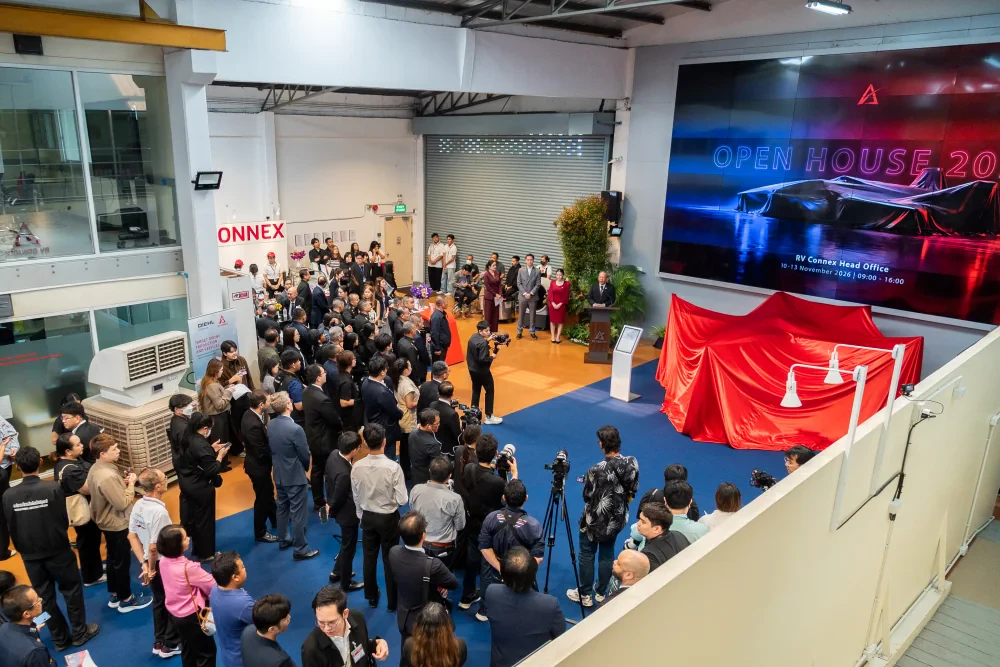
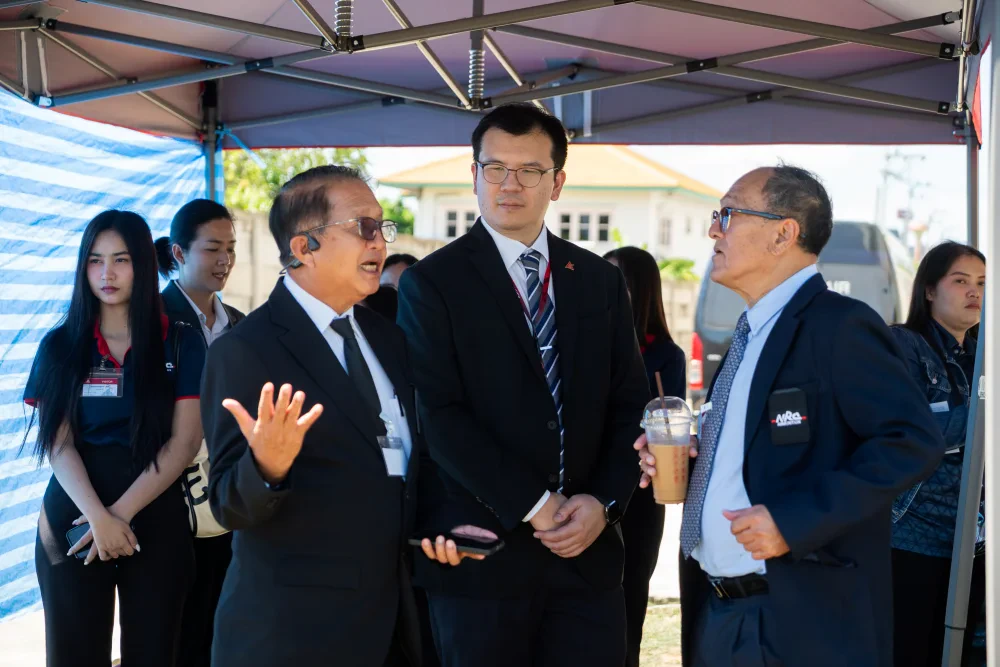
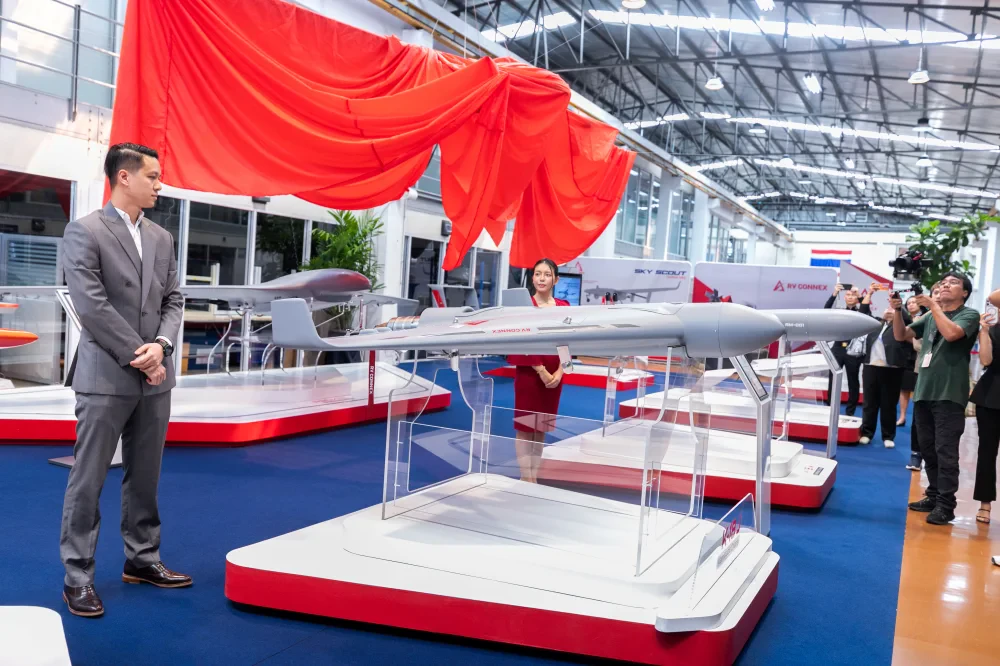
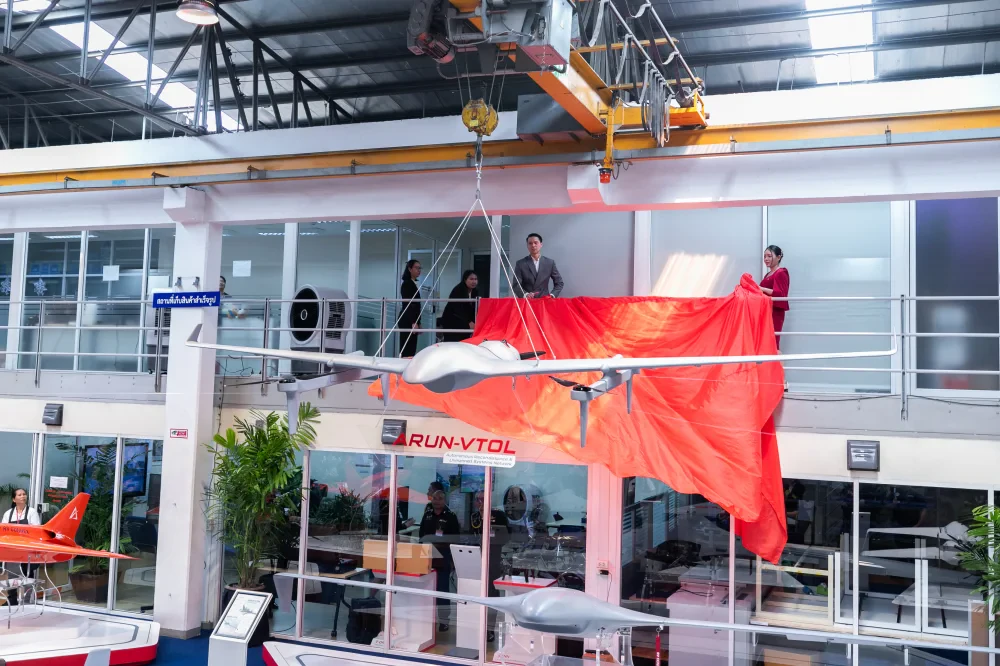
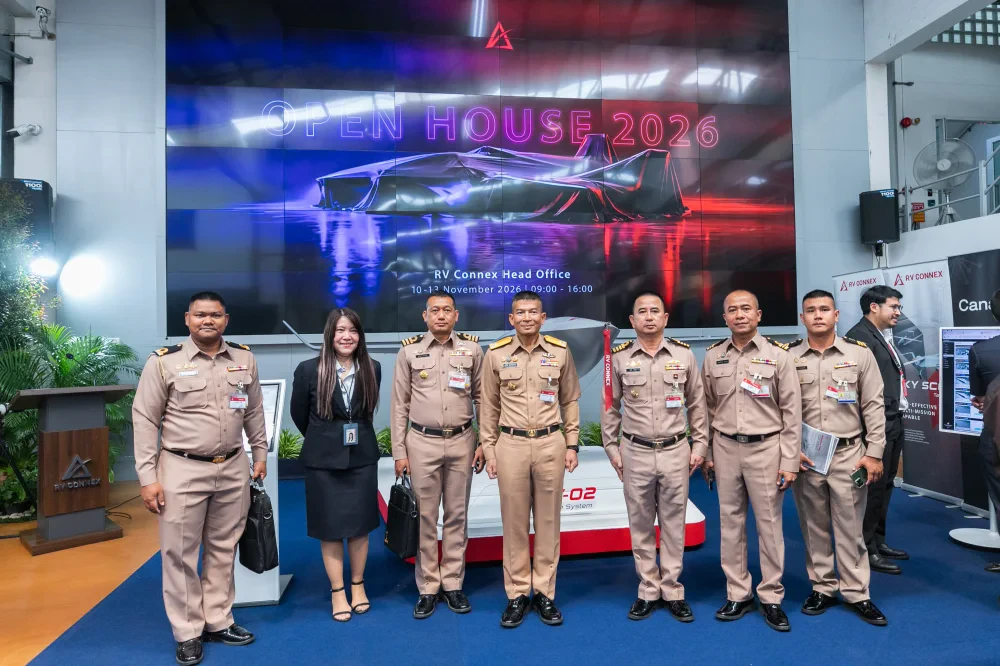
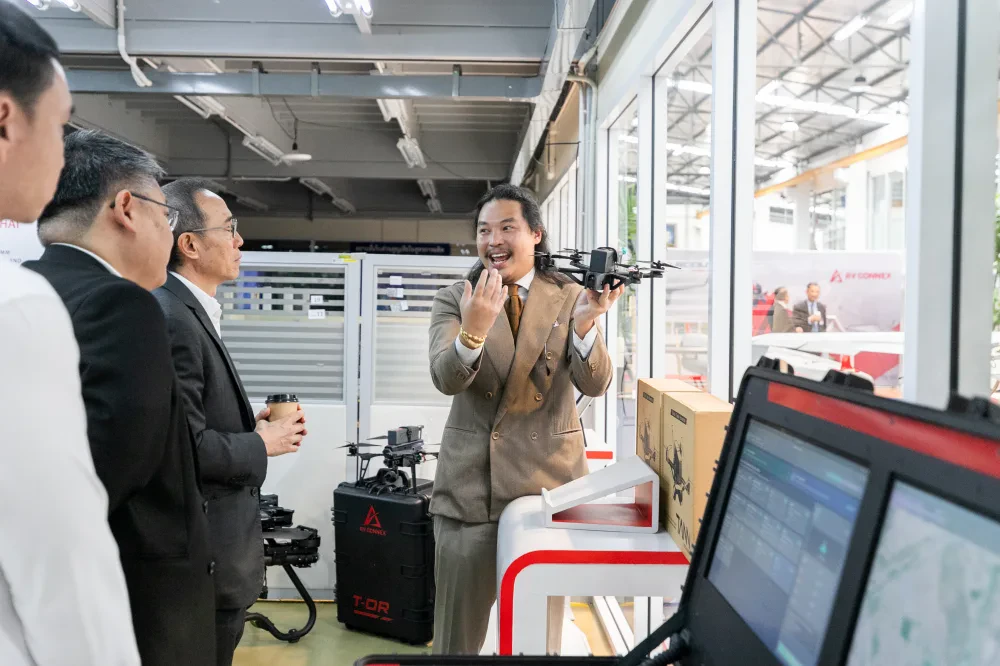
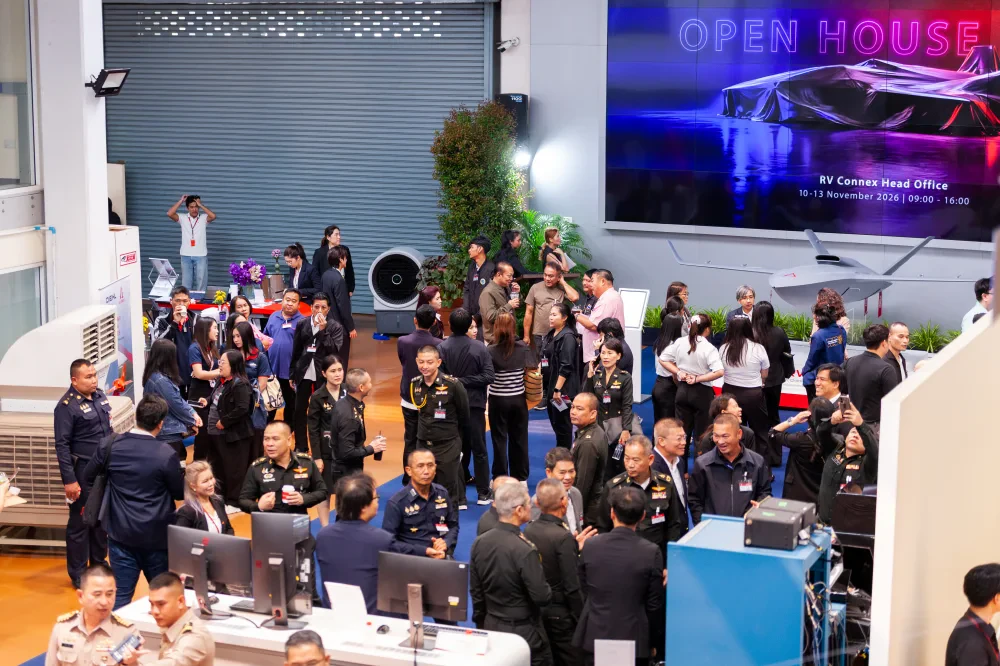
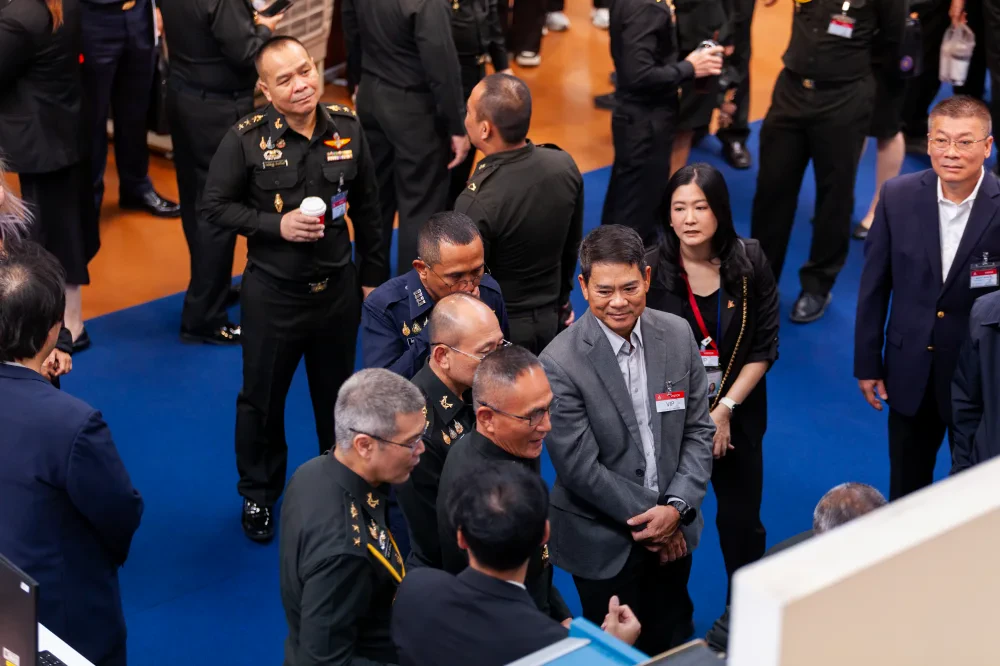
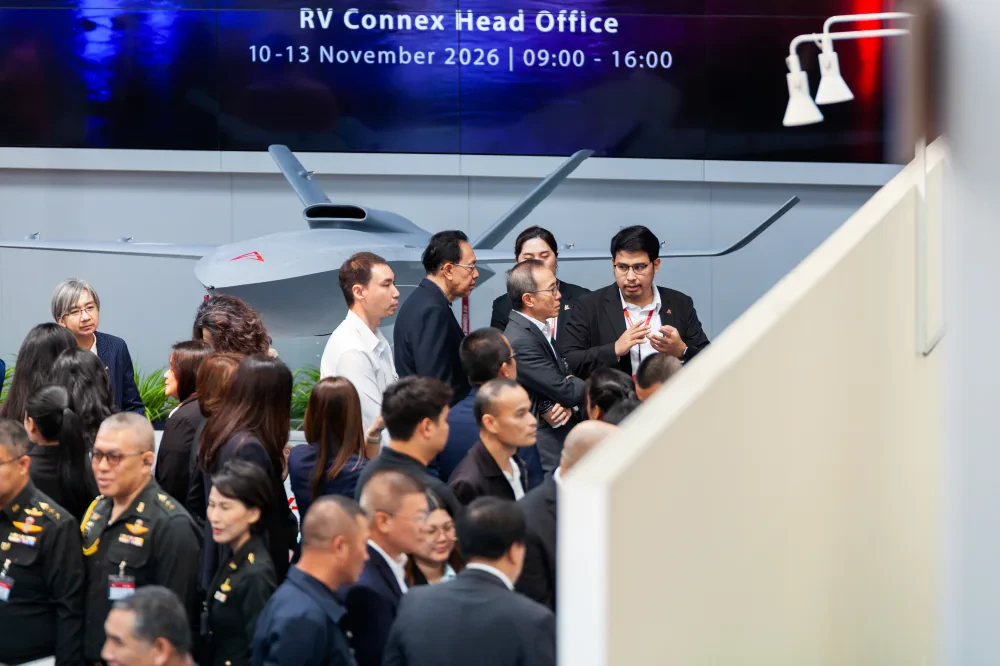
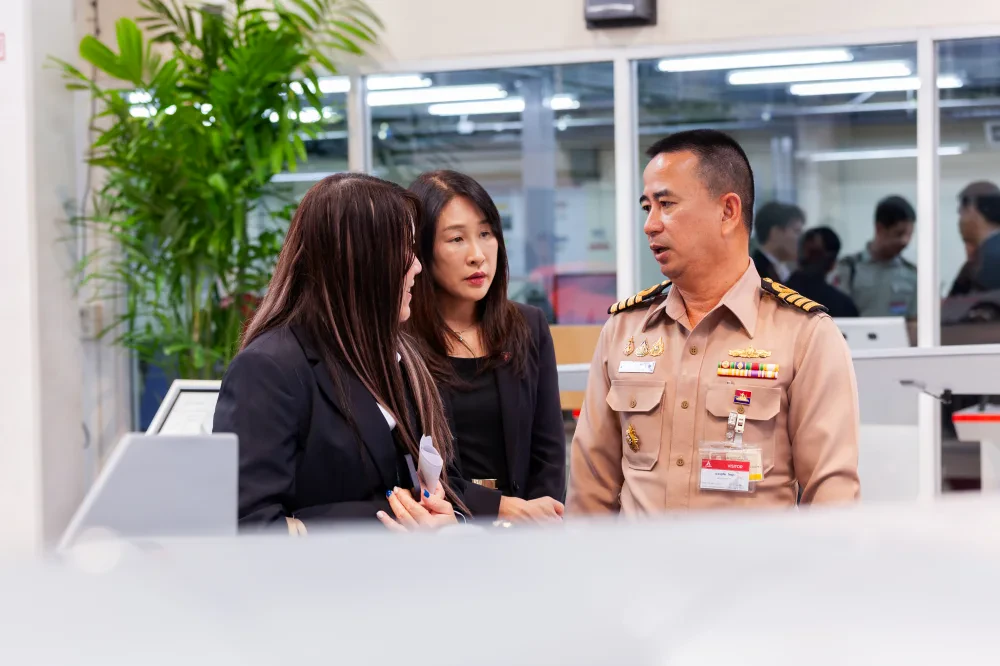
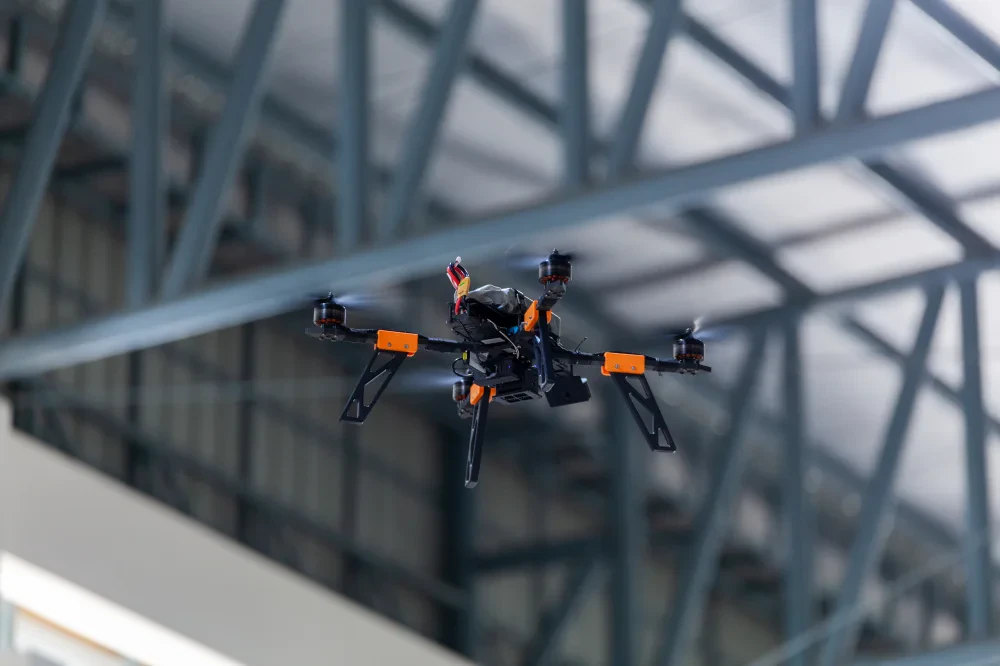
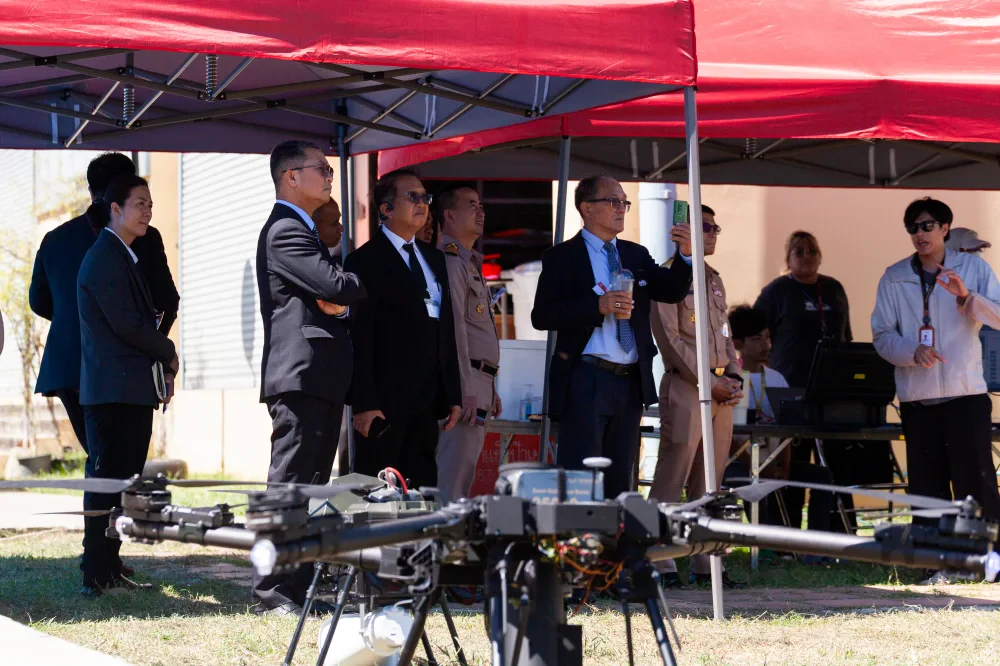
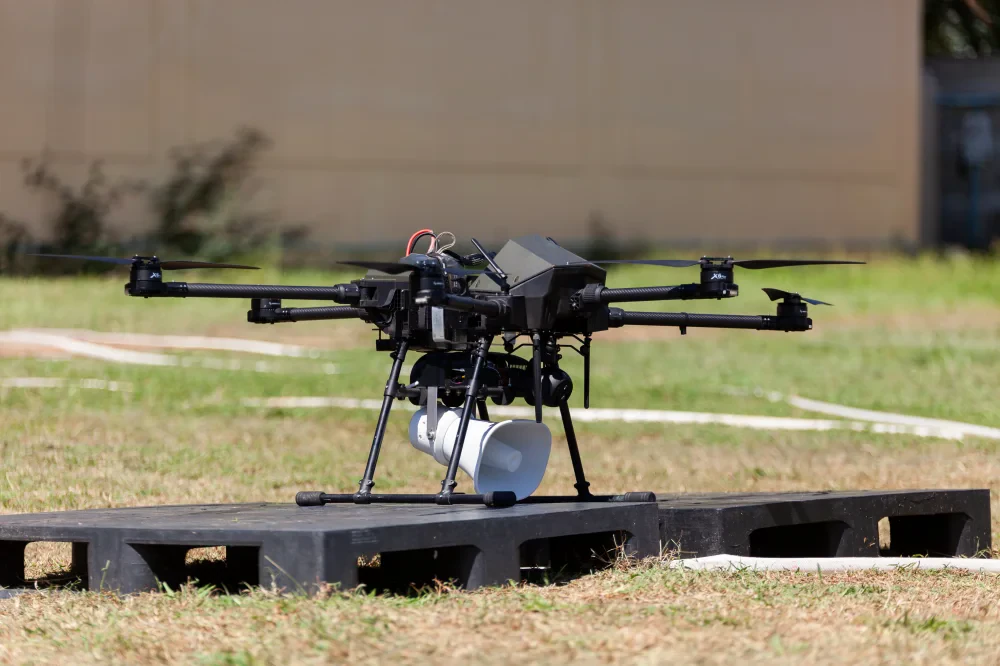
Pathum Thani, 10 November 2026 — R V Connex Co., Ltd. unveiled four new unmanned aircraft to the public for the first time at the opening ceremony of Open House 2026, held at the company’s headquarters in Pathum Thani. The aircraft — JRV-02, JRV-01 TE, K-18J and ARUN VTOL — were designed, developed, tested and manufactured by Thai engineers within Thailand, in a matter of months.
Considered together, the four aircraft represent not four separate product launches but a single connected capability: from detecting and identifying a target, to reaching it, to training and testing the air defence systems that must counter such threats in the real world.
ARUN VTOL: Extended Reach, Fewer Constraints
ARUN VTOL serves as the eyes of the surveillance mission. Taking off and landing vertically on its own rotors, it removes the need for an airfield, a catapult or a recovery net, and can operate from open ground without dedicated infrastructure.
The aircraft remains airborne for six hours at a service ceiling of 15,000 feet, with two payload bays carrying a combined 10–12 kilograms. This allows EO/IR cameras, thermal imaging and SAR radar to operate together within a single sortie, returning data from multiple sensors without flying each mission separately. Once a target is identified, precise coordinates can be passed directly to the units that will act on them.
K-18J: Jet-Powered Attack Unmanned Aircraft
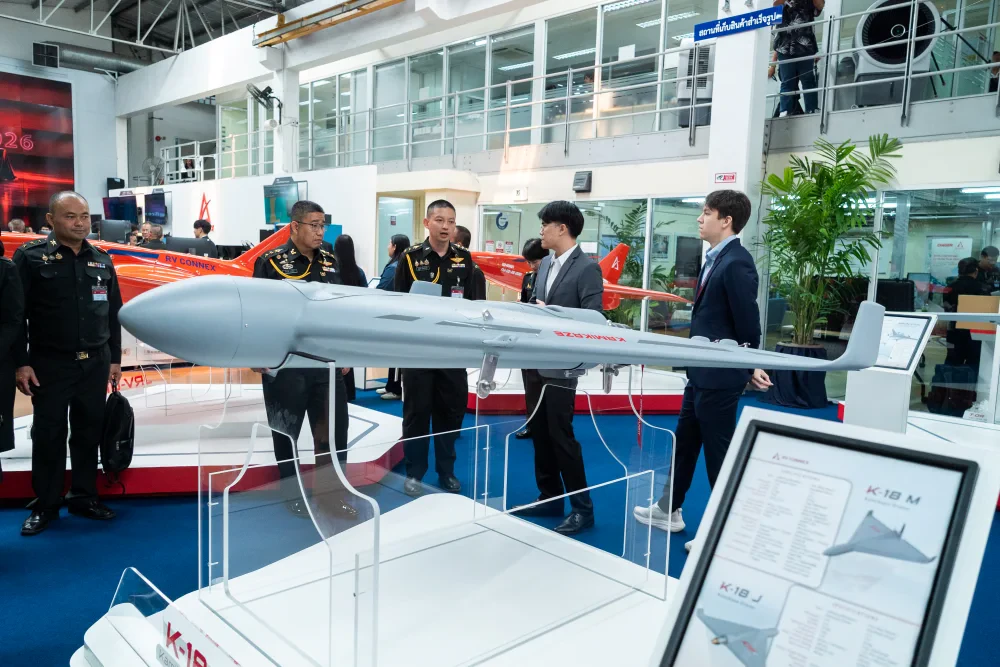
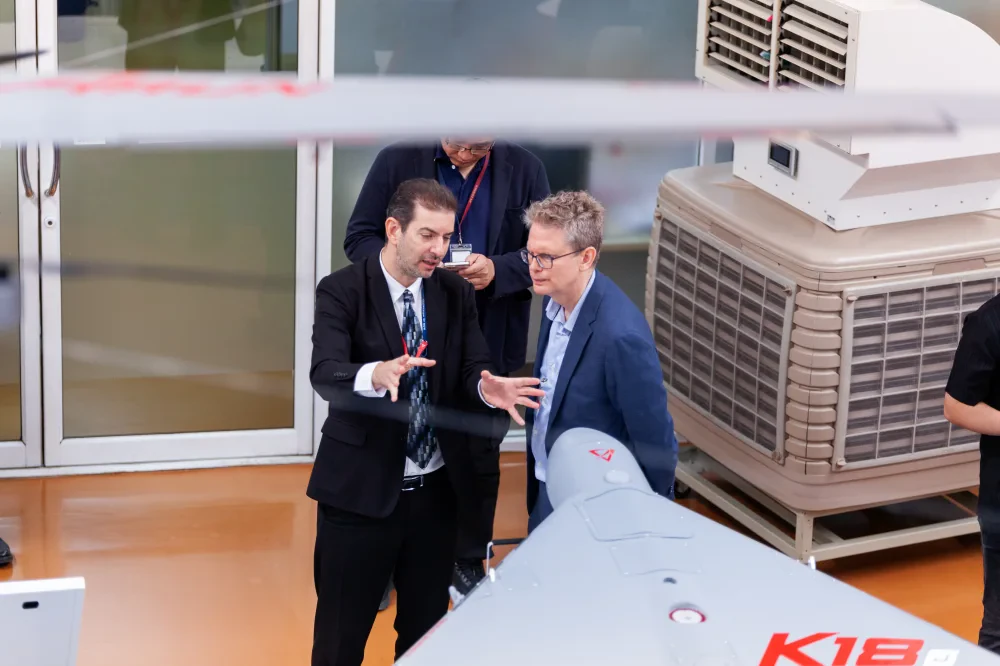
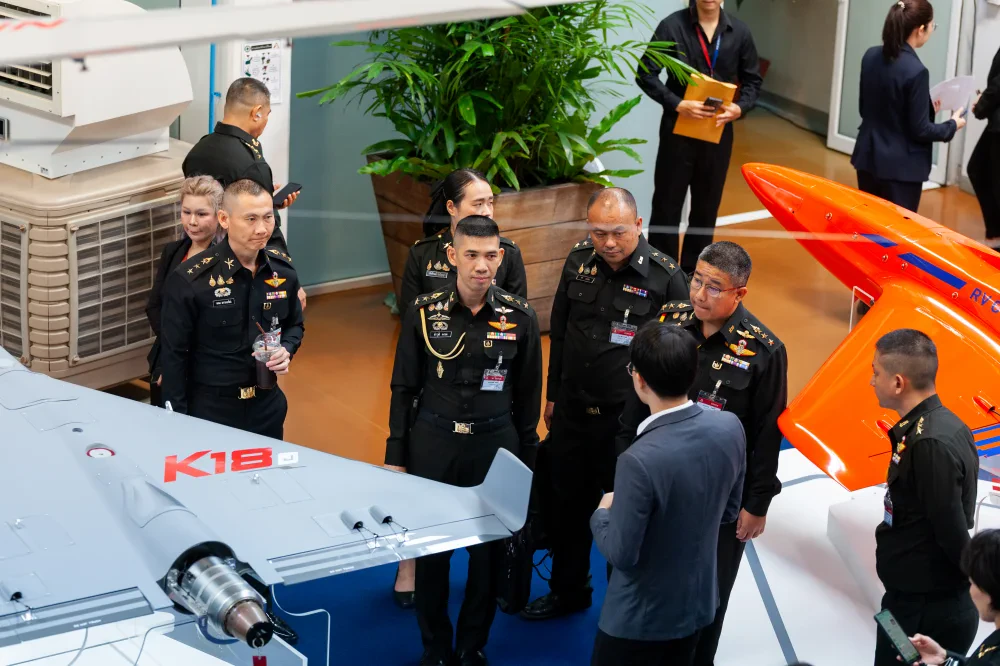
K-18J is an attack unmanned aircraft developed from the earlier piston-engine variant, now transitioned to a jet engine with an entirely redesigned airframe. It reaches a maximum speed of 200 knots on its attack run, with an operational range exceeding 150 kilometres.
The aircraft supports two mission profiles: loitering and tracking a target for up to one hour (loitering munition), and single-pass engagement (one-way attack). It is built on an open architecture, allowing operators to configure and further develop the system according to their own requirements.
JRV-02 and JRV-01 TE: Aerial Targets for Air Defence Training and Testing
An air defence system is only ready for a real engagement if it has trained and been tested against targets that replicate the flight profile of an actual threat. This is the role of JRV-02 and JRV-01 TE.
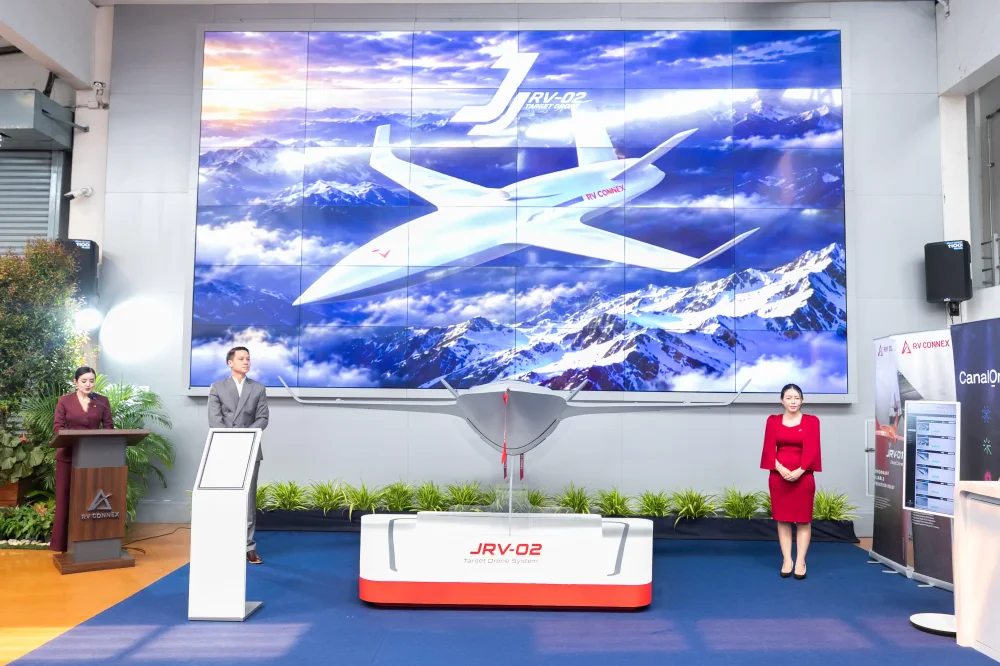
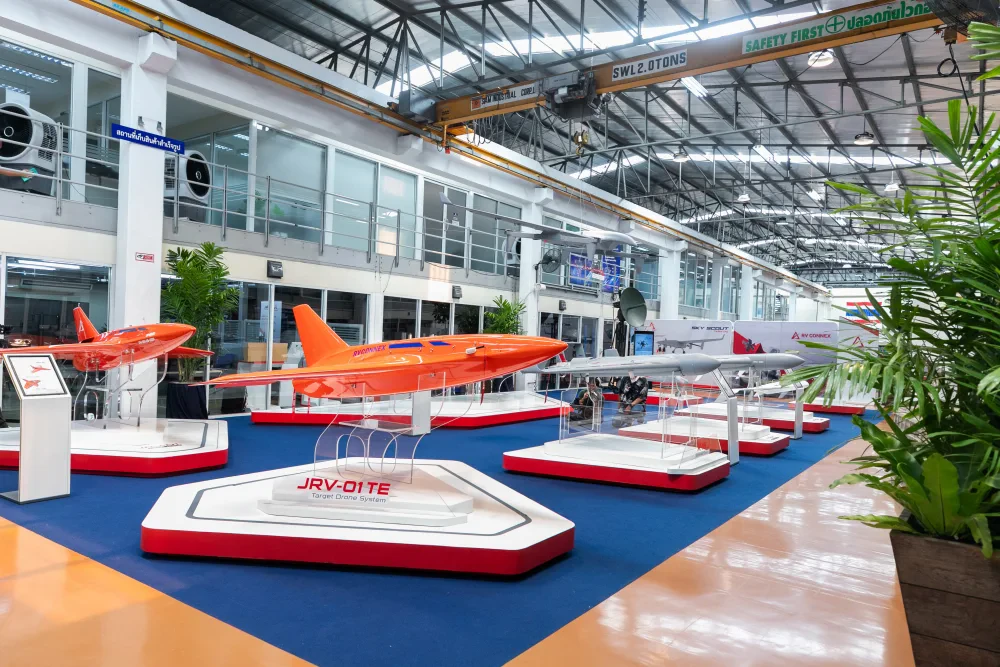
JRV-02 is the third aircraft in the JRV family, with an airframe and configuration entirely redesigned from its predecessors. Powered by twin jet engines delivering 900 newtons of combined thrust, it reaches a maximum speed of 350 knots — Mach 0.53 — at a service ceiling of 15,000 feet, sufficient to replicate the flight profiles of fighter aircraft and guided missiles for testing both air defence systems and the crews who operate them.
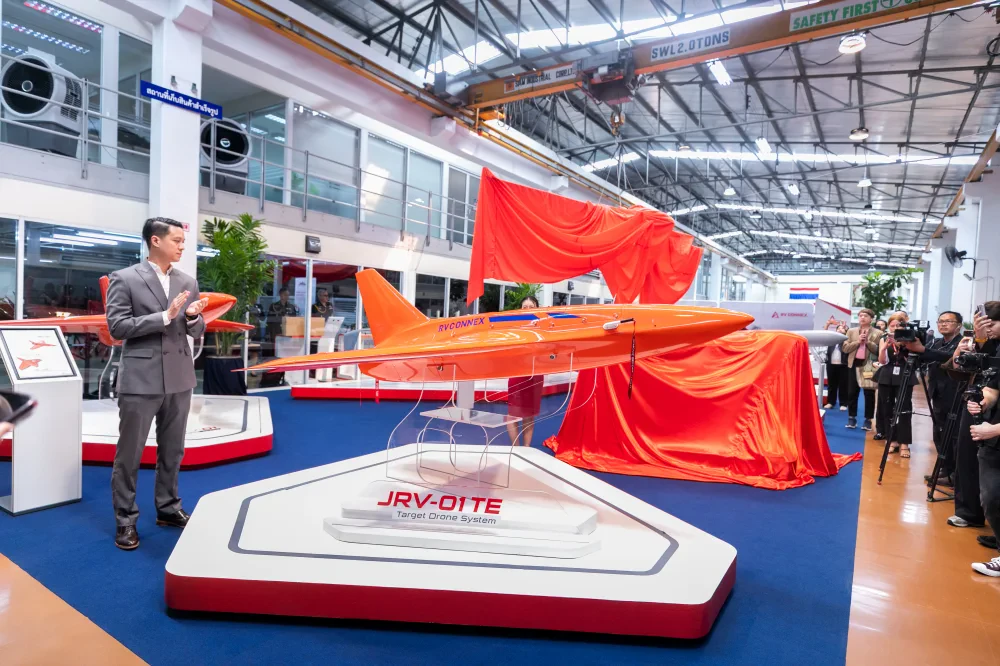
JRV-01 TE develops the original single-jet JRV-01 into a twin-jet configuration, reaching a maximum speed of 260 knots.
Both aircraft are catapult-launched, requiring no runway, and recovered by parachute for repeated reuse across multiple sorties — significantly reducing cost per sortie compared with imported expendable targets.
This launch demonstrates that Thailand can now develop and manufacture a complete family of three jet-powered aerial targets domestically, alongside the first jet-powered attack unmanned aircraft developed within the country.
From Concept to Flight: Compressing Years into Months
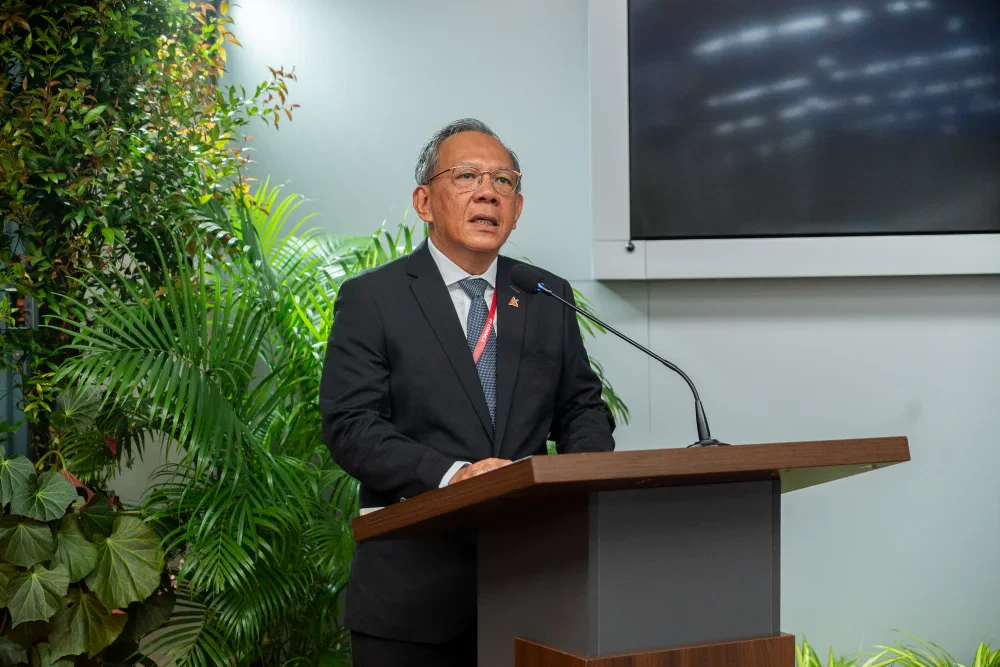
Beyond the aircraft themselves, the company places equal weight on the time taken to build them. Assoc. Prof. Dr. Sujate Jantarang, President of RV Connex, noted that the greatest change over the past decade has not been technology, but time. Developing a single aircraft type — from defining the requirement to an airframe that genuinely flies — once took years. These four aircraft took months.
That shift stems from improved tools and working methods, and from the application of artificial intelligence in shortening the distance between concept and physical article. “The best system in the world means nothing if it arrives too late,” the President said. “Speed of delivery has itself become a capability — and a country that cannot manufacture for itself can never be fast.”
This speed is made possible by in-house design and production capability spanning the entire process: structural design, composite and mechanical parts manufacturing, aircraft cable harness production, electronics, software and autopilot systems, through to systems integration and testing. Every stage is carried out within the company’s own facilities, allowing full control of the production process and configuration tailored to each operator’s specific requirements.
Technology Sovereignty: Having Choices and Controlling What Matters
This leads to the principle the President considers most important — technology sovereignty. It does not mean producing everything domestically, as no country in the world can do so entirely. It means knowing precisely where a nation’s dependencies lie, and what alternatives exist should access to those technologies or resources be withdrawn.
“If you cannot answer that question, you do not have technology — you have a temporary licence to use it,” he said, explaining that over the past decade the company has steadily brought externally dependent capabilities under its own control. Not out of a desire to do everything alone, but to ensure the choice exists where it matters to mission execution.
Most of the technology developed by the company is dual-use, applicable to both security and civilian missions. The same unmanned aircraft that searches for survivors in a flooded area can fly border surveillance; the same cyber threat monitoring system that protects security agencies also protects hospitals and banks.
That capability was demonstrated in practice this October, when the company deployed unmanned aircraft in support of flood relief operations in Rangsit, Pathum Thani — conducting aerial survey and situation assessment, producing aerial photographic mapping for Rangsit City Municipality, and delivering more than 1,340 sets of meals and relief supplies by air to locations vehicles could not reach.
Four Pillars of Capability: Beyond the Aircraft in View
The company emphasises that the aircraft represent only one part of its capability — and the most visible part, comparable to the tip of an iceberg above the waterline. The organisation rests on four principal pillars:
Platform — the design and manufacture of unmanned aircraft, aircraft upgrade and modification, and the production of composite and mechanical components.
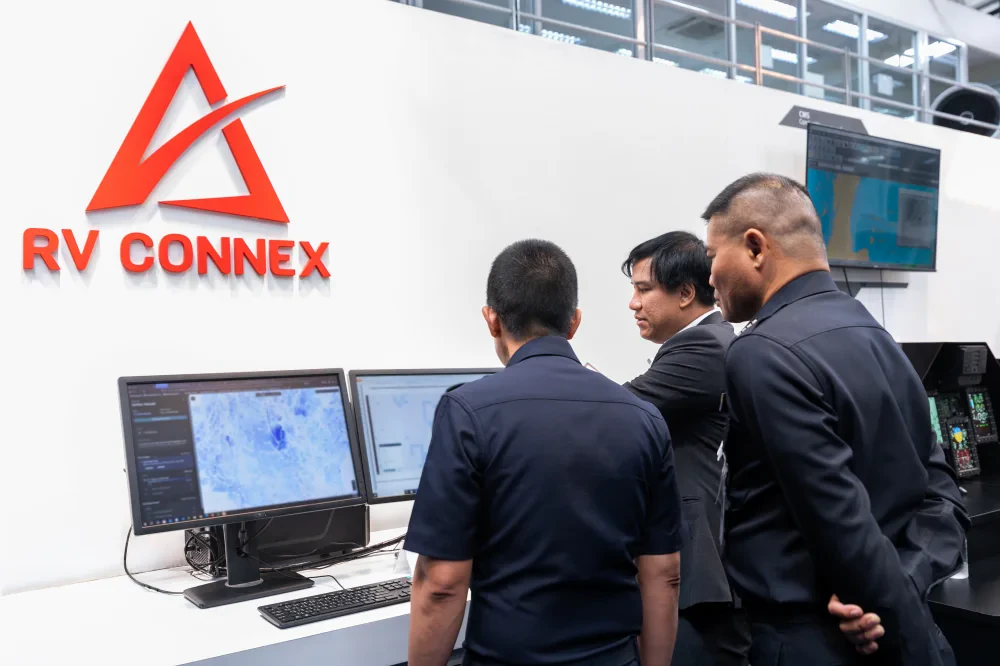
C⁶ISR — Tactical Data Link, Combat Management System (CMS), the Integrated Operational Center (IOC), and the Image Intelligence Center (IMINT).
Security — the PRAGARN anti-drone system, together with cyber threat monitoring and response capabilities.
Space — satellite assembly, integration and testing, as well as the production and installation of ground stations.
In cybersecurity, the company develops solutions addressing threats at the same level of sophistication organisations worldwide now face. Its products have been reviewed on Gartner Peer Insights — the first cybersecurity company in Southeast Asia to be reviewed on the platform — and it is the first Thai company to implement the NIST Cybersecurity Framework 2.0.
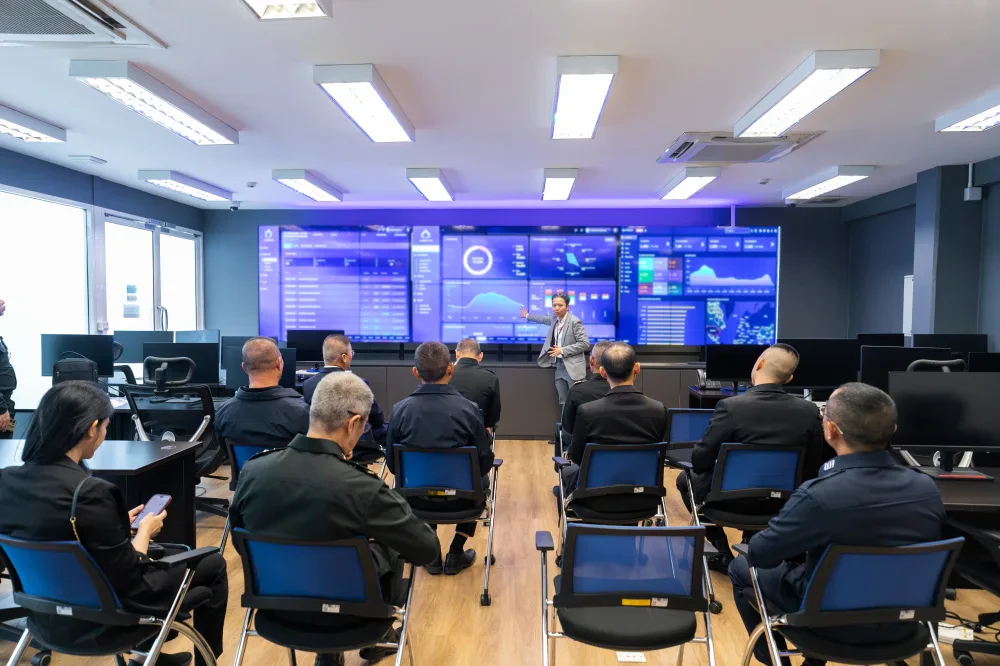
The company has also applied generative AI within the AZURITES Next platform to filter and process data while explaining attack events in each organisation’s own context, in real time. The platform currently serves clients both in Thailand and internationally. Throughout all four days of Open House, a Cyber Attack Live workshop will demonstrate AZURITES Next capabilities, presented by the company’s cybersecurity specialists.
Ten Years of Building Foundations, So the Next Generation Can Go Further
2026 also marks ten years of operation for RV Connex, reached on 28 July. In the defence technology industry, a decade means more than an anniversary. This is a sector built on trust and continuity: earning the confidence to deliver systems on which the safety and lives of operators depend takes both time and consistency.
Ten years therefore serve as evidence that the company has built a supply chain, a body of knowledge and a team of engineers that continue to grow and operate — not a single project that began and ended. Throughout that period, the company has worked with domestic universities and research institutes, and with partners in Thailand and abroad, with the explicit aim of developing the people who will carry the work forward. As the President put it: the engineers who will take over in ten years’ time are, today, still sitting in classrooms.
“These four aircraft are not an achievement — they are evidence,” he said in his closing remarks. “Evidence that what we could not do ten years ago, we can do today. And what we cannot yet do today, the next generation will do ten years from now.”
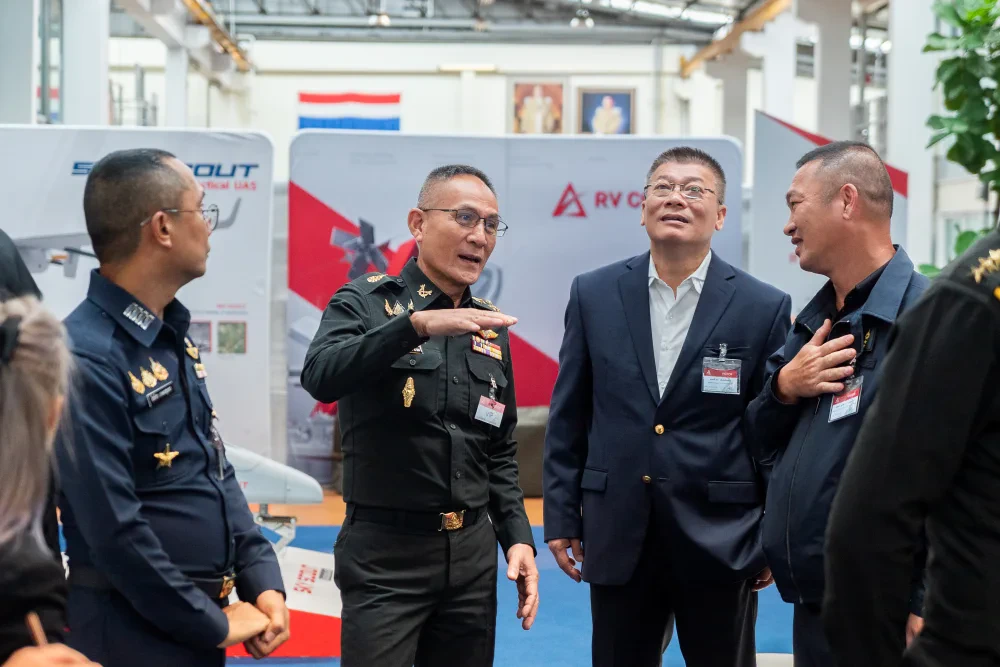
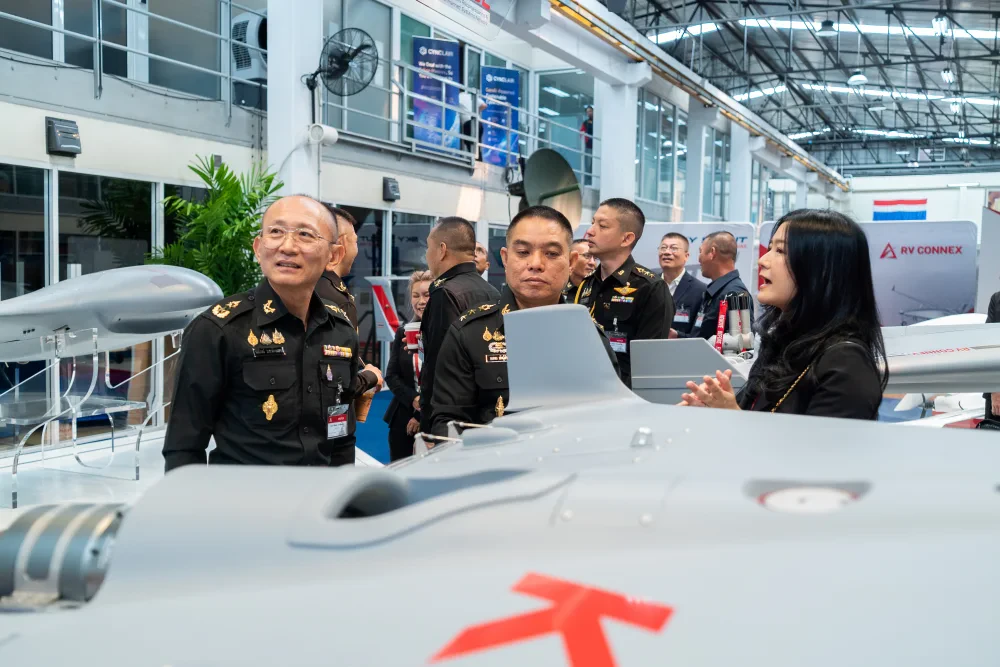
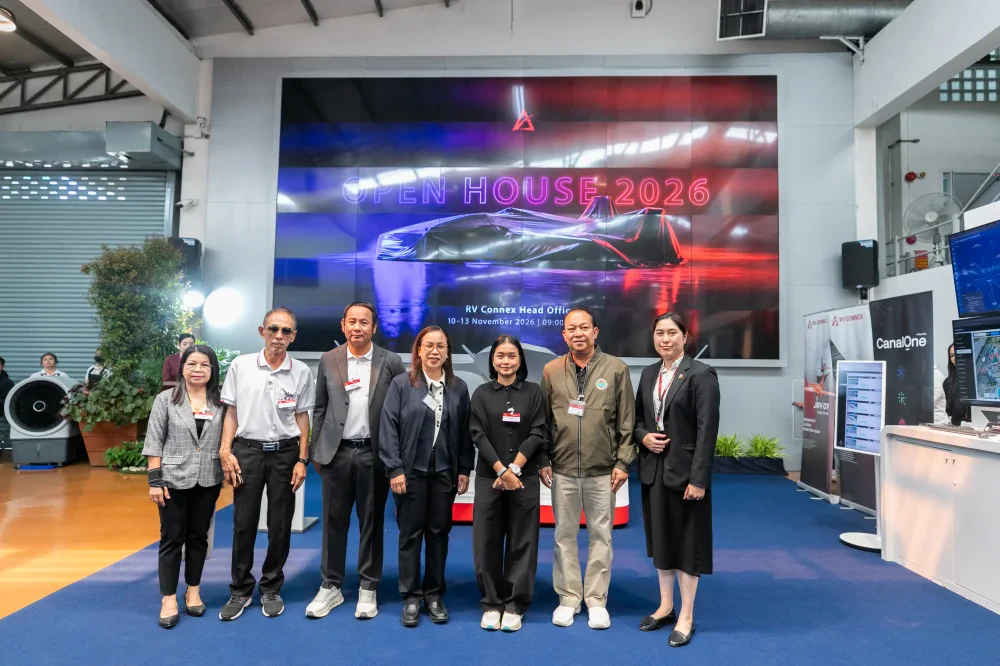
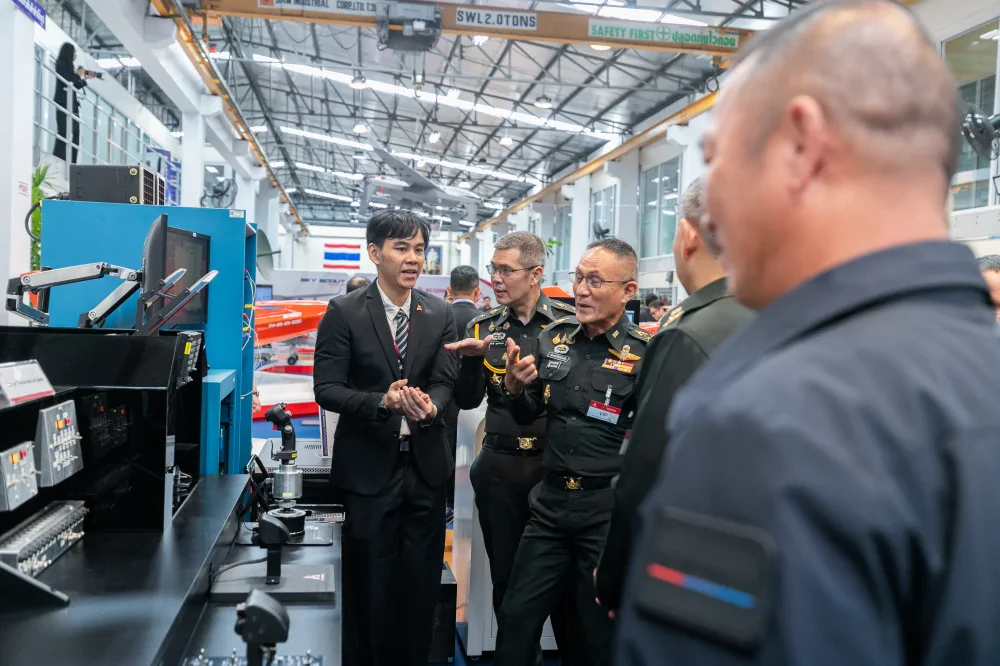
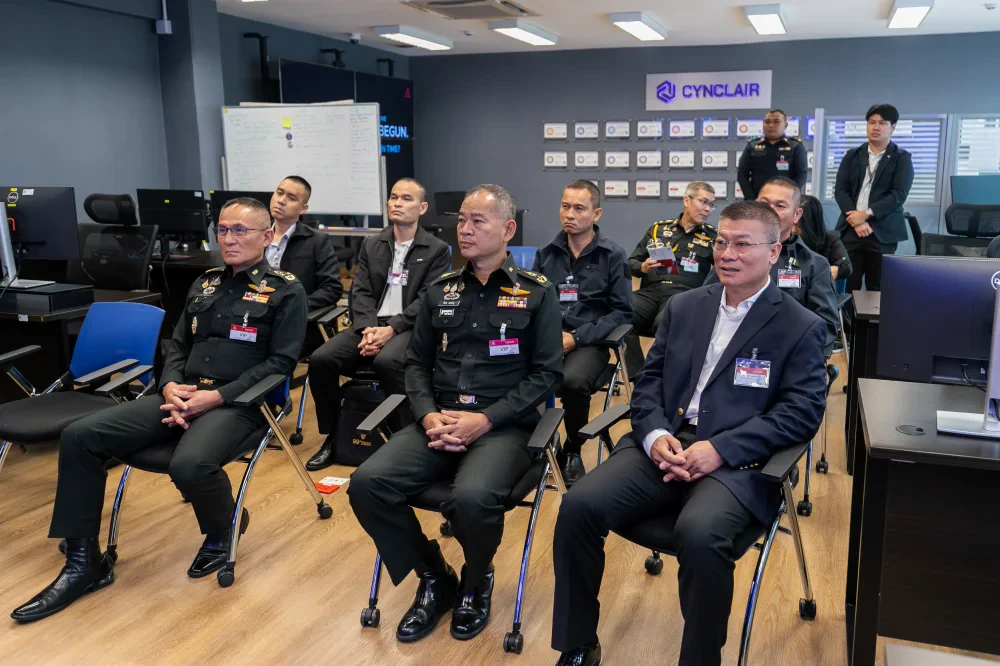
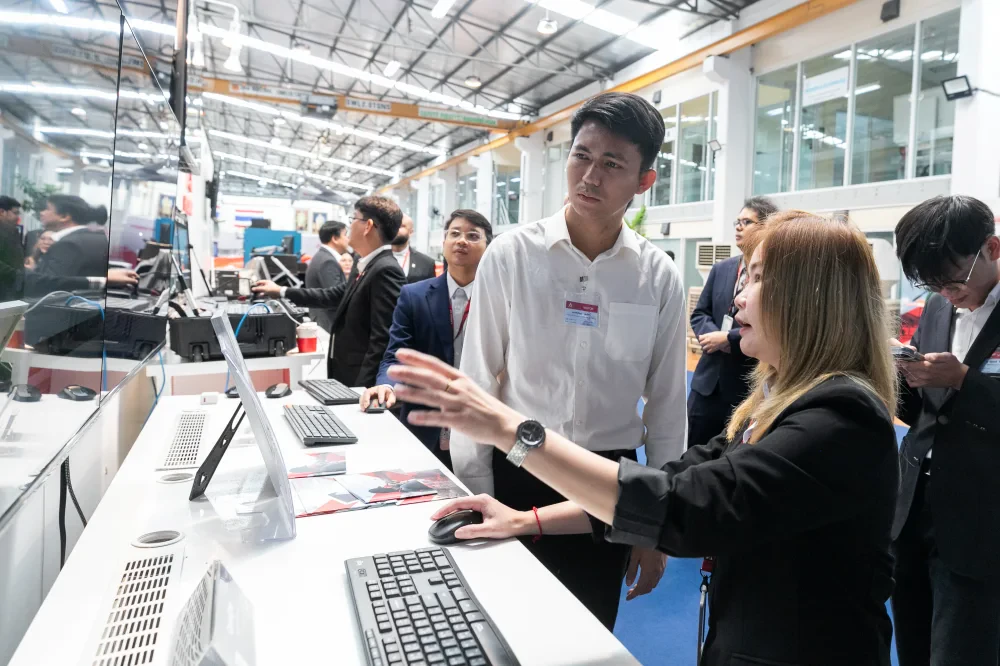
Open House 2026 is open to government and private sector organisations, both Thai and international, from 10 to 13 November 2026, 09:00–16:00, at the company’s headquarters, 30/1 Moo 1, Phaholyothin Road, Klong Nueng Sub-district, Klong Luang District, Pathum Thani. The programme covers the company’s full operational and production areas, from the UAV integration and testing facility, composite and cable harness production lines, and system integration laboratory, to the cyber security operation centre and the satellite assembly, integration and testing facility.
Gallery